The Teachings of Swami Anandavanam Bharathi: Finding Inner Peace Through Self-Transformation
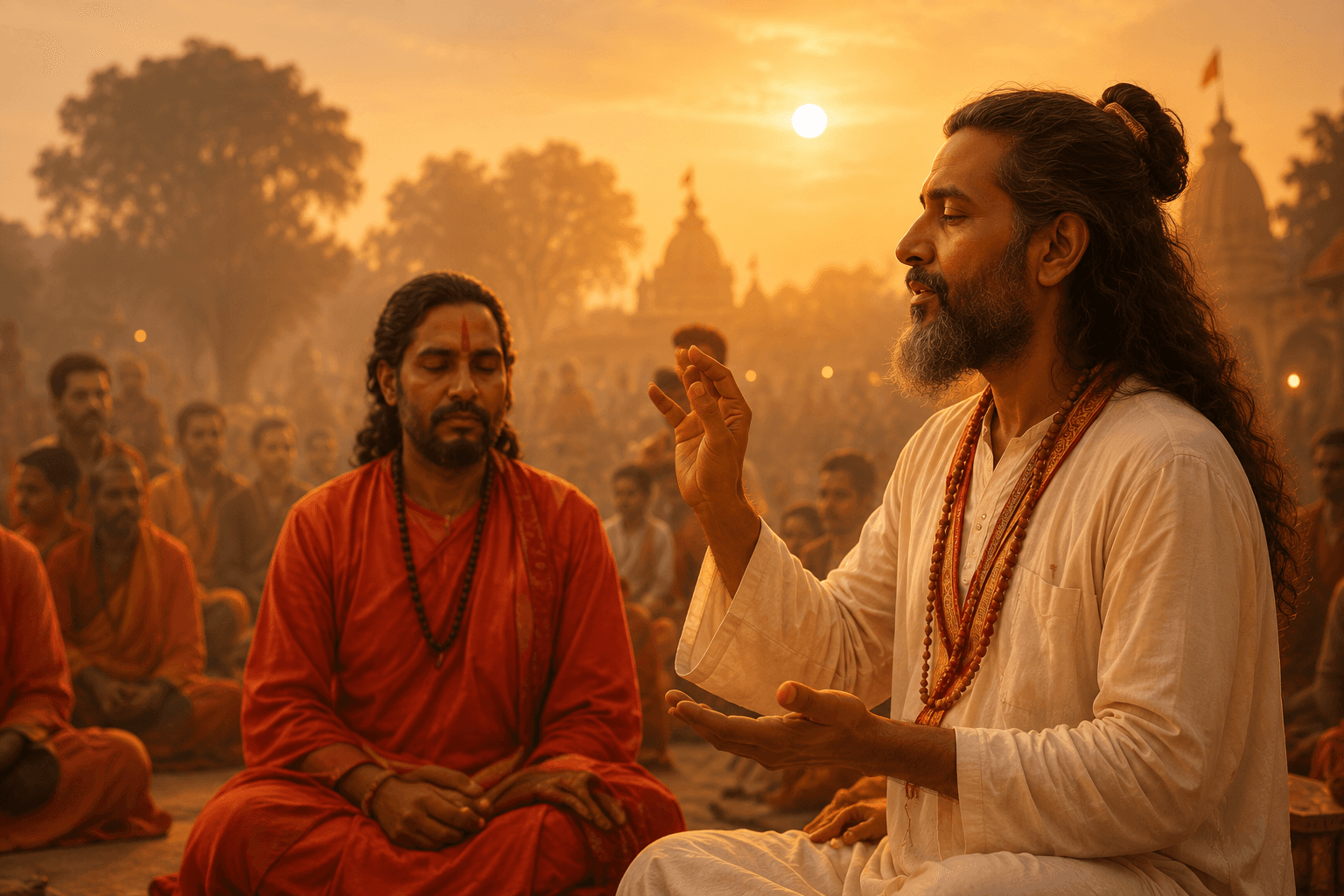
In every generation, there are spiritual teachers who remind people that the greatest journey is not across mountains or oceans, but within the human heart. While the world constantly changes, the questions that people carry remain remarkably similar. How can we find lasting peace? What gives life meaning? How do we remain calm in the face of uncertainty? These are not modern questions; they are timeless ones. The teachings of Swami Anandavanam Bharathi offer thoughtful guidance for those seeking answers through the wisdom of Sanatana Dharma.
Rather than presenting spirituality as something distant or reserved for monks living in the Himalayas, Swami Anandavanam Bharathi encourages people to recognise that spiritual growth begins in everyday life. Every thought, every action, and every relationship becomes an opportunity to understand ourselves more deeply. His approach is practical, compassionate, and rooted in the belief that lasting transformation begins within the individual before it can influence the world around them.
Spirituality Begins with Knowing Yourself
Many people imagine spirituality as a collection of rituals, ceremonies, or religious practices. While these traditions certainly have their place, Swami Anandavanam Bharathi teaches that genuine spirituality starts with self-understanding. Before attempting to change society or judge others, a person must first learn to observe their own thoughts, emotions, and actions honestly.
Every individual carries strengths as well as weaknesses. Fear, anger, attachment, pride, and anxiety often shape decisions without us even noticing. Spiritual practice encourages us to become aware of these tendencies, not to condemn ourselves, but to gradually transform them through awareness and discipline.
According to this perspective, self-transformation is not achieved overnight. It is a lifelong journey that unfolds through patience, reflection, and sincere effort. Every small improvement in character becomes a meaningful step toward inner peace.
Looking Beyond External Success
Modern society often measures success through wealth, status, recognition, or professional achievements. While these accomplishments may provide comfort and opportunity, they do not necessarily bring lasting happiness. Many people discover that even after achieving their goals, they continue searching for something more meaningful.
Swami Anandavanam Bharathi reminds us that external success and inner fulfilment are not always the same. A peaceful mind cannot be purchased, and genuine contentment cannot be measured by material possessions. Lasting happiness arises when a person's thoughts, actions, and values remain in harmony.
This does not mean abandoning professional ambitions or family responsibilities. Instead, it means recognising that these aspects of life become more meaningful when guided by wisdom, compassion, and ethical living.
The Practice of Self-Correction
One of the distinctive aspects of Swami Anandavanam Bharathi's teachings is his emphasis on self-correction. Rather than focusing on the faults of others, he encourages individuals to examine their own behaviour with honesty and humility.
Every mistake offers an opportunity to learn. Every challenge provides a chance to develop patience. Every disagreement invites us to respond with greater understanding instead of immediate judgment. Through this continuous process of self-improvement, character gradually becomes stronger and the mind becomes more peaceful.
This approach reflects an important principle within Sanatana Dharma. Spiritual growth is not measured by how much knowledge a person possesses but by how deeply that knowledge transforms daily life.
Living with Detachment, Not Indifference
The word "detachment" is often misunderstood. Some people assume it means withdrawing from family, society, or emotions. Swami Anandavanam Bharathi presents a different understanding. True detachment is not about avoiding life but about avoiding unhealthy attachment.
A person can love deeply without becoming possessive. One can work sincerely without becoming consumed by success or failure. It is possible to care for others while accepting that change is an inevitable part of life.
When expectations dominate every relationship, disappointment naturally follows. Detachment creates emotional balance, allowing people to experience joy without becoming dependent upon circumstances for their happiness. It encourages resilience during difficult times and gratitude during moments of success.
Knowledge Must Lead to Wisdom
Information has become easier to access than ever before. Books, videos, and digital platforms offer endless opportunities for learning. Yet knowledge alone does not automatically produce wisdom.
Swami Anandavanam Bharathi reminds seekers that true understanding comes through experience and practice. Reading about compassion is valuable, but practicing compassion transforms character. Learning about meditation is useful, but only regular practice reveals its benefits. Studying sacred texts becomes meaningful when their teachings influence everyday decisions.
This distinction between knowledge and wisdom has always been central to India's spiritual traditions. The purpose of learning is not merely intellectual satisfaction but personal transformation.
Meditation as a Way of Life
Meditation is often associated with sitting quietly in silence for a fixed period each day. While formal meditation remains an important discipline, Swami Anandavanam Bharathi's teachings suggest that mindfulness can extend into every aspect of life.
When eating, one can eat with gratitude rather than distraction. When speaking, one can choose words with awareness rather than impulse. When working, one can remain fully present instead of allowing the mind to wander endlessly.
Gradually, daily life itself becomes a form of meditation. Peace is no longer confined to a prayer room or meditation hall but accompanies the individual throughout ordinary activities.
This understanding makes spirituality accessible to everyone, regardless of age, profession, or lifestyle.
Service as an Expression of Spirituality
One of the recurring themes in Swami Anandavanam Bharathi's philosophy is that genuine spirituality naturally expresses itself through service. A peaceful mind does not remain isolated from society. Instead, it develops greater compassion for the well-being of others.
Helping someone in need, offering guidance to a student, supporting a struggling family, protecting nature, or contributing to community welfare can all become spiritual practices when performed with sincerity and humility.
Service is not viewed as an obligation performed for recognition. It becomes an expression of gratitude and an opportunity to recognise the same divine presence within every individual.
This understanding bridges the gap between personal spiritual practice and social responsibility, demonstrating that both can strengthen one another.
Dharma in Everyday Decisions
Many people associate Dharma only with religious ceremonies or ancient scriptures. However, Swami Anandavanam Bharathi encourages people to understand Dharma as a way of living with integrity.
Every decision presents an opportunity to act according to truth, fairness, compassion, and responsibility. Whether at home, in the workplace, or within society, Dharma encourages individuals to choose actions that contribute positively to themselves and others.
Living according to Dharma does not guarantee an easy life. Difficult choices often require courage and sacrifice. Yet these decisions ultimately create inner stability because they align with one's deepest values rather than temporary desires.
Finding Balance in a Fast-Changing World
Today's world moves at an extraordinary pace. Technology connects people across continents within seconds, yet many individuals experience increasing stress, loneliness, and emotional exhaustion. Constant information, endless comparisons, and growing expectations often leave little room for quiet reflection.
The teachings of Swami Anandavanam Bharathi remain especially relevant in such an environment. He reminds people that peace cannot be found simply by changing external circumstances. Instead, it arises through discipline, self-awareness, and the ability to remain centred regardless of changing situations.
This perspective does not reject modern life. Rather, it encourages individuals to engage with the modern world while remaining rooted in timeless values that provide clarity and emotional stability.
A Spiritual Path Open to Everyone
One of the most encouraging aspects of Swami Anandavanam Bharathi's teachings is their inclusiveness. Spiritual growth is not presented as a path reserved for monks or scholars. Every individual, regardless of profession, age, or background, can begin cultivating awareness, kindness, discipline, and wisdom in daily life.
Parents can express spirituality through patience and love within their families. Students can practice honesty and dedication in their studies. Professionals can approach their work with integrity and responsibility. Community members can strengthen society through acts of service and compassion.
In this way, spirituality becomes woven into ordinary life rather than separated from it.
The Journey Never Truly Ends
Swami Anandavanam Bharathi's teachings remind us that spirituality is not about reaching a final destination where every question disappears. Instead, it is a continuous journey of learning, growing, and refining ourselves. Every experience becomes a teacher, every challenge an opportunity for growth, and every act of kindness a step toward greater inner freedom.
His message is both simple and profound. Peace begins within. Transformation begins with self-awareness. Knowledge becomes meaningful only when it changes the way we live. Service becomes sacred when performed without expectation. Dharma remains alive when expressed through everyday actions.
In a world searching for certainty amid constant change, these teachings offer something timeless: the understanding that the greatest transformation begins not by changing the world around us, but by changing ourselves. Through patience, compassion, discipline, and sincere self-reflection, every individual has the ability to walk the path toward a more peaceful, purposeful, and meaningful life.