The Inspiring Journey of Swami Anandavanam Bharathi: From Student Leader to Mahamandaleshwar
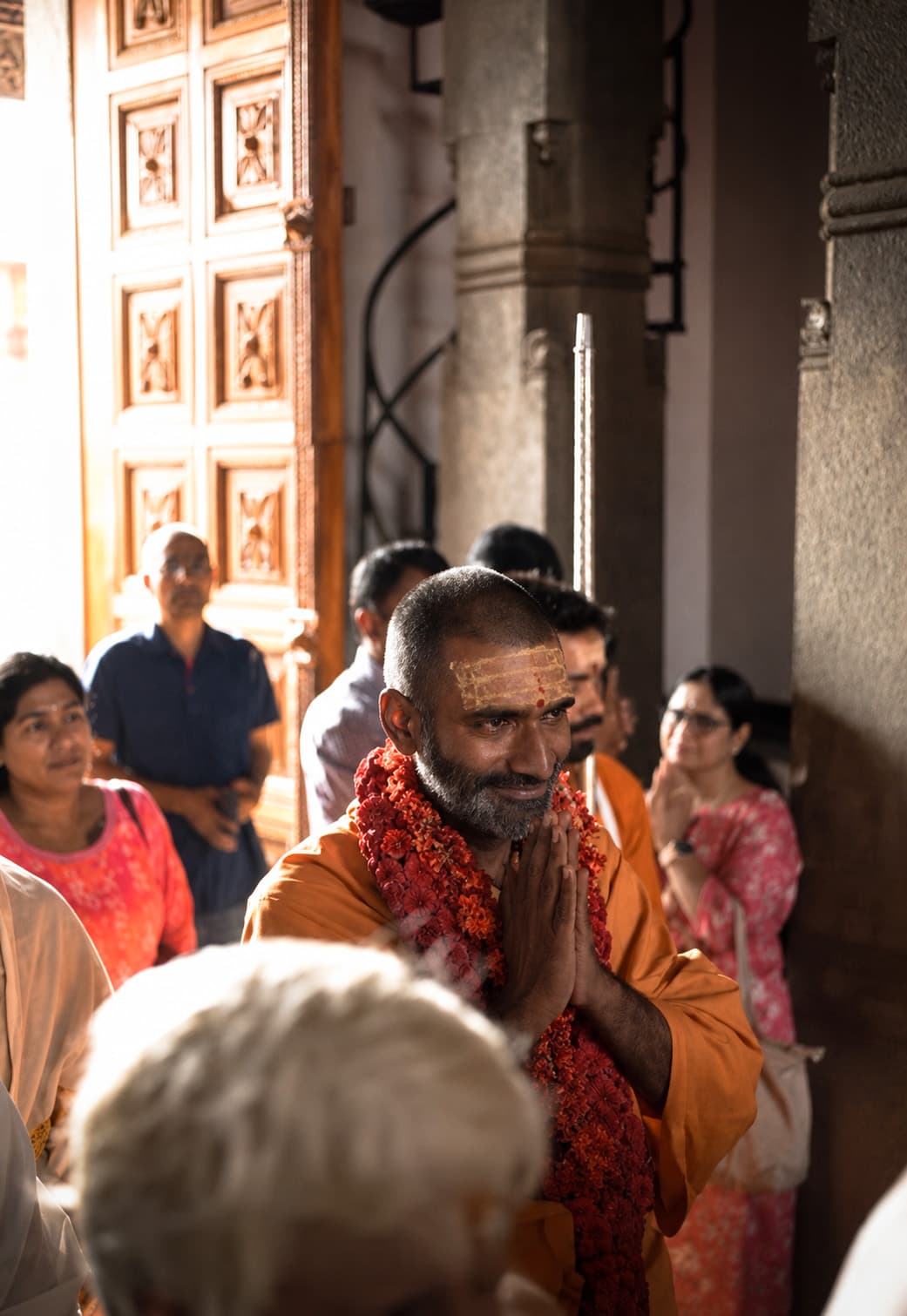
There are moments in life that quietly change the direction of a person forever. Sometimes they arrive through success, sometimes through struggle, and sometimes through an unexpected encounter that awakens a deeper purpose. The life of Swami Anandavanam Bharathi is one such story. It is not simply the journey of a man who chose spirituality over worldly pursuits; it is the story of someone who experienced different dimensions of life before dedicating himself entirely to the path of Sanatana Dharma.
From his early years in Kerala to his active involvement in student leadership, from a successful career in journalism to years of spiritual discipline in the Himalayas, every stage of his life contributed to the person he is today. His elevation as Mahamandaleshwar of Juna Akhada marked not only a personal milestone but also an important moment for Kerala's spiritual landscape. His journey demonstrates that spirituality is often born through experience, reflection, and sincere self-discovery rather than sudden transformation.
A Childhood Rooted in Kerala
Every meaningful journey begins with ordinary beginnings. Before he became known as Swami Anandavanam Bharathi, he was born as P. Salil in Chalakudy, a town in Kerala known for its rich cultural heritage and deep spiritual traditions. Growing up in a family that valued education and discipline, he was influenced by the values of curiosity, learning, and social awareness from an early age.
His father worked at Madura Coats while his mother was a teacher, creating an environment where education and responsibility were naturally encouraged. Like many young people of his generation, he was interested in understanding society and its challenges. These early experiences shaped his perspective and laid the foundation for his later search for meaning beyond ordinary success.
Student Politics and a Passion for Public Life
College life introduced him to a completely different world. During his years at Christ College, Irinjalakuda, and later at Sree Kerala Varma College, he became actively involved in student politics. He wasn't someone who watched events unfold from the sidelines. Instead, he stepped into leadership roles, believing that young people had the responsibility to participate in shaping society.
His involvement in student organisations allowed him to develop qualities that would remain with him throughout his life. Leadership, discipline, public speaking, and the ability to understand different viewpoints became part of his personality. Alongside politics, he also took part in library movements and theatre activities, reflecting an interest not only in governance but also in literature, culture, and public engagement.
At this stage in life, very few could have imagined that this energetic student leader would one day become one of the respected spiritual leaders of India's largest monastic order. Yet every experience, even those that seemed unrelated to spirituality, was quietly preparing him for a greater purpose.
Journalism: A Search for Truth
After completing his studies, he pursued journalism and earned a diploma from the Kerala Media Academy. He later worked as a correspondent for Mathrubhumi, one of Kerala's leading newspapers.
Journalism taught him to observe without assumptions. Every assignment required listening carefully, asking thoughtful questions, and understanding multiple perspectives before forming conclusions. Reporting on different communities exposed him to the realities of ordinary people's lives, their struggles, their aspirations, and their search for hope.
While journalism fulfilled his intellectual curiosity, it also introduced him to a deeper question. Facts could explain events, but they did not always explain human suffering, inner peace, or the purpose of life. These questions slowly became more important than the stories he was reporting, quietly leading him toward a different path.
A Turning Point at the Kumbh Mela
Some journeys begin with a deliberate decision. Others begin with a single unexpected moment.
For Swami Anandavanam Bharathi, that moment came in 2001 when he attended the Kumbh Mela. At the time, he was still deeply connected to public life, but spending several days on the banks of the sacred Ganga exposed him to a completely different way of living.
Surrounded by saints, ascetics, pilgrims, and seekers from every corner of India, he encountered a spiritual tradition that had remained alive for centuries. The atmosphere was unlike anything he had experienced before. It was a place where worldly identities faded, and the pursuit of inner transformation became the highest goal.
Rather than treating the visit as a temporary experience, he allowed it to change him. What began as a journey to the Kumbh Mela slowly became the beginning of a lifelong search for spiritual understanding.
Years of Seeking
After returning from the Kumbh Mela, his interest in spirituality continued to deepen. He travelled repeatedly to Haridwar, Varanasi, Rishikesh, and the Himalayan region, spending time with saints, studying traditional teachings, and observing different forms of spiritual practice.
These were not occasional visits made out of curiosity. They represented a sincere effort to understand the philosophical foundations of Sanatana Dharma through direct experience. During this period, he continued his professional responsibilities while also engaging with spiritual literature and working alongside respected spiritual teachers.
Gradually, his priorities began to change. Material success no longer occupied the centre of his life. Instead, he became increasingly drawn toward the discipline, simplicity, and self-inquiry that define the traditional path of renunciation.
Entering Juna Akhada
Every spiritual tradition has moments of formal commitment, and for Swami Anandavanam Bharathi, that moment came during the 2013 Kumbh Mela when he formally entered Juna Akhada.
Juna Akhada is one of India's oldest and largest monastic traditions, preserving centuries of spiritual knowledge, disciplined practice, and service to Sanatana Dharma. Joining such an institution is not simply about adopting a new identity. It requires years of dedication, humility, rigorous training, and complete commitment to a spiritual way of life.
His years within the Akhada involved extensive pilgrimages, disciplined spiritual practice, and periods of austerity, including time spent in the challenging environment of the Himalayas. These experiences shaped not only his understanding of philosophy but also his character, teaching patience, resilience, and surrender.
The Meaning of Naga Deeksha
One of the defining milestones in his spiritual journey came in 2018 when he received Naga Deeksha.
Within Juna Akhada, Naga Deeksha represents far more than a ceremonial initiation. It signifies complete dedication to the ideals of renunciation and a lifelong commitment to protecting and preserving Sanatana Dharma. It also reflects years of preparation, discipline, and spiritual maturity.
Receiving this initiation placed him within an ancient lineage of ascetics whose lives are devoted to spiritual practice, service, and the preservation of India's sacred traditions. The journey that had begun with curiosity had now become a life of total commitment.
Becoming Mahamandaleshwar
On 26 January 2024, Swami Anandavanam Bharathi was anointed as Mahamandaleshwar by the leadership of Juna Akhada.
The title of Mahamandaleshwar is among the highest recognitions within the Akhada tradition. It is awarded only to those whose years of spiritual discipline, scholarship, leadership, and service have earned the respect of the monastic community.
For Kerala, this appointment carried additional significance. His elevation represented an important chapter in the state's connection with one of India's oldest spiritual institutions. It also reflected the growing relationship between Kerala's spiritual heritage and the wider traditions of Sanatana Dharma across the country.
A Practical Approach to Spirituality
One of the most distinctive aspects of Swami Anandavanam Bharathi's teachings is his emphasis on spirituality as a process of self-understanding rather than blind belief.
He encourages people to look inward, identify their own weaknesses, and gradually transform themselves through knowledge, discipline, and sincere practice. In his view, spirituality is not an escape from life but a way of engaging with life more consciously.
This perspective makes his message especially relevant today. In a fast-moving world filled with distractions, many people seek peace without understanding its source. His teachings suggest that lasting peace begins with self-awareness, ethical living, and continuous personal growth.
Serving Society Through Spiritual Leadership
Today, Swami Anandavanam Bharathi continues his work from the Avadhootha Ashram in Kottarakkara, Kerala. His responsibilities extend beyond guiding individual seekers. He is also involved in strengthening spiritual awareness, supporting the preservation of Sanatana Dharma, and contributing to the growth of Juna Akhada's presence in South India.
His leadership reflects the traditional understanding that spirituality and service are inseparable. True spiritual practice is expressed not only through meditation but also through compassion, guidance, education, and the willingness to contribute to society.
By combining traditional wisdom with an understanding of contemporary challenges, he seeks to make timeless teachings accessible to modern generations without compromising their authenticity.
A Journey That Continues to Inspire
The life of Swami Anandavanam Bharathi reminds us that personal transformation is rarely immediate. It unfolds gradually through experience, learning, reflection, and the courage to embrace change. His path from student leadership and journalism to becoming Mahamandaleshwar demonstrates that every stage of life can contribute to a deeper understanding of oneself and one's purpose.
His story also highlights an important truth: spirituality is not reserved for those who begin life in monasteries or ashrams. It is open to anyone willing to seek sincerely, question honestly, and grow continuously.
As he continues to guide devotees and contribute to the spiritual life of South India, his journey serves as an example of dedication, resilience, and the enduring relevance of Sanatana Dharma in the modern world. It is a story that continues to inspire—not because it is extraordinary in appearance, but because it reflects the timeless human search for truth, meaning, and inner peace.